When most people think about studying abroad, they picture sky-high tuition bills, safety concerns, and the constant anxiety of stretching a tight budget. China flips that script entirely. For international students who make the move, the country offers a combination of affordability, safety, infrastructure, and opportunity that is genuinely difficult to replicate elsewhere. The following ten points are not marketing copy — they are the lived reality that thousands of international students discover every year.
# 1. Tuition Fees That Won't Break the Bank
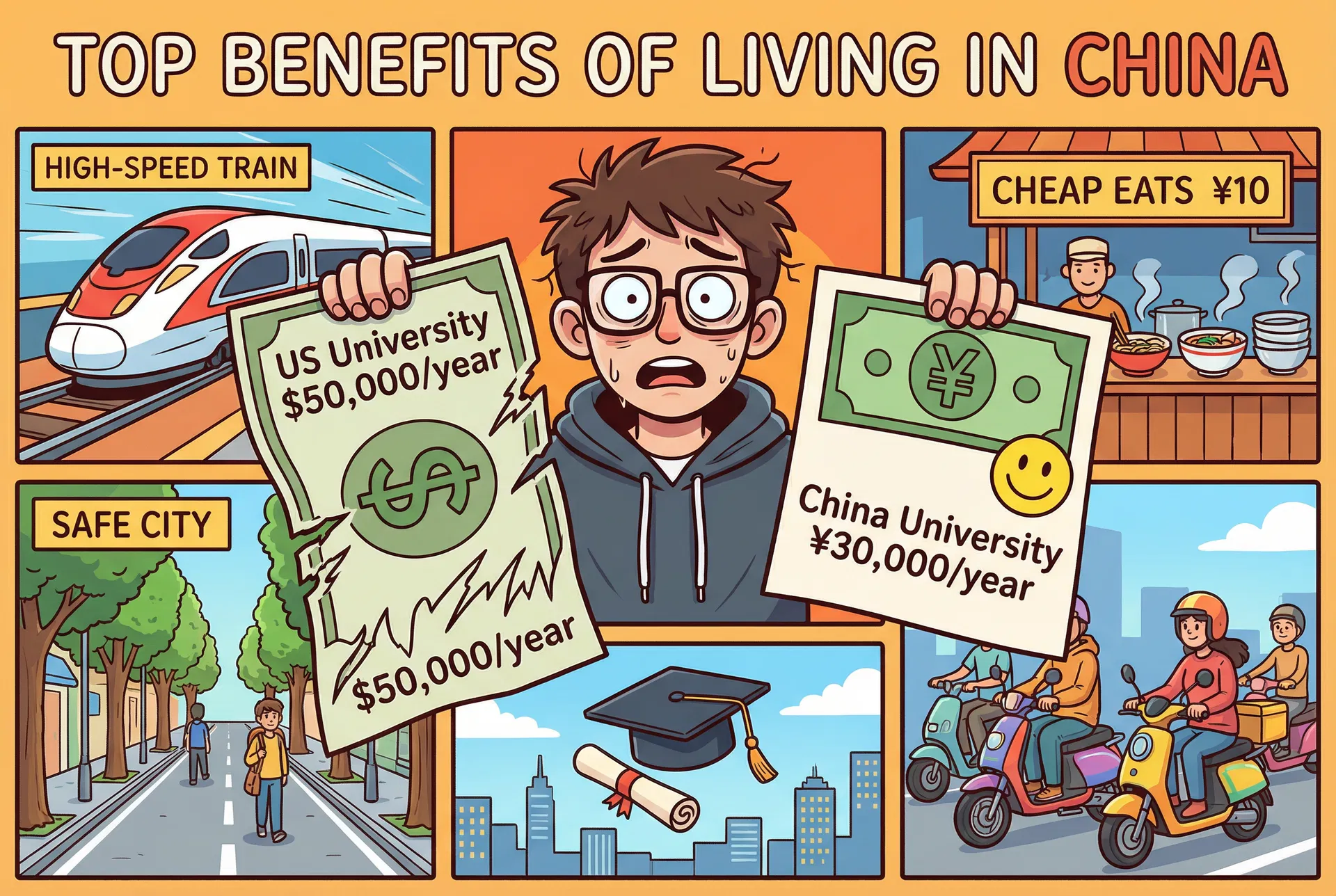
The single most jaw-dropping difference between studying in China and studying in the United States, the United Kingdom, or Australia is the cost of a degree. At a top Chinese university such as Peking University, Fudan University, or Zhejiang University, annual tuition for international students typically ranges from ¥20,000 to ¥40,000 RMB (roughly USD 2,800–5,600). Compare that to the average annual tuition at a US public university for out-of-state students — which exceeds USD 28,000 — and the difference becomes staggering.
Beyond tuition, the Chinese government and individual universities offer a wide range of scholarships specifically for international students, including the prestigious Chinese Government Scholarship (CSC), which covers tuition, accommodation, and provides a monthly living stipend. Many students find that the total cost of a four-year bachelor's degree in China is less than a single year at a comparable institution in the West.
# 2. Food Prices That Feel Almost Unreal
Street food and canteen meals in China are among the most affordable in the world. A full bowl of hand-pulled noodles or a plate of rice with two dishes at a university canteen typically costs between ¥8 and ¥15 RMB (about USD 1.10–2.10). Even sit-down restaurants in major cities rarely charge more than ¥40–60 per person for a satisfying meal.
The variety is equally impressive. From spicy Sichuan hot pot and Cantonese dim sum to Xinjiang lamb skewers and Shanghai soup dumplings, the culinary landscape across China's regions means that eating well on a student budget is not a compromise — it is simply the norm. International students from South and Southeast Asia often remark that Chinese food prices feel comparable to home, while those from Europe and North America describe the experience as transformative.
# 3. One of the Lowest Crime Rates Among Major Nations
Personal safety is a genuine concern for any student moving abroad, and China consistently ranks among the safest countries in the world for residents and visitors alike. According to the Global Peace Index, China ranks well above the United States, Brazil, South Africa, and most of Europe on personal safety metrics. Gun violence, in particular, is virtually non-existent.
International students regularly report walking home alone late at night without anxiety, leaving belongings unattended in cafés, and using public transport at any hour without incident. Cities like Chengdu, Hangzhou, and Suzhou are frequently cited as exceptionally safe environments for young people living independently for the first time.
# 4. Guns Are Banned — And It Shows
China has some of the strictest gun control laws in the world. Private ownership of firearms is prohibited for civilians, and the results speak for themselves: mass shootings are essentially unheard of, and gun-related crime is statistically negligible. For students coming from countries where gun violence is a daily news item, the psychological relief of living in a gun-free society is profound and immediate.
This is not merely an abstract policy point. It shapes the texture of daily life — the absence of metal detectors at shopping malls, the relaxed atmosphere at public events, and the general sense that public spaces are genuinely shared and safe. Students from the United States, in particular, often describe this aspect of Chinese life as one of the most unexpectedly positive adjustments they make.
# 5. High-Speed Rail and Affordable Air Travel
China operates the world's largest high-speed rail network, with over 45,000 kilometres of track connecting virtually every major city. A journey from Beijing to Shanghai — roughly 1,300 kilometres — takes just four and a half hours on the G-class bullet train, at a cost of around ¥550–650 RMB (USD 75–90). Travelling from Guangzhou to Chengdu, a distance comparable to crossing several European countries, is similarly fast and affordable.
Domestic flights are equally competitive. Budget carriers such as Spring Airlines and Juneyao Air regularly offer fares between major cities for under ¥300 RMB (USD 40) when booked in advance. For international students who want to explore China's extraordinary geographic and cultural diversity — from the karst mountains of Guilin to the deserts of Xinjiang — the combination of high-speed rail and cheap flights makes weekend travel genuinely accessible on a student income.
# 6. Electric Vehicles and E-Scooters Everywhere
China is the world's leading market for electric vehicles, and nowhere is this more visible than in the daily life of its cities. Electric scooters and e-bikes are ubiquitous, affordable to rent or purchase, and form the backbone of short-distance urban transport for millions of students. A second-hand electric scooter can be purchased for as little as ¥800–1,500 RMB, and monthly running costs are minimal.
Ride-hailing apps such as DiDi make getting around cities cheap and convenient, with electric vehicles now making up a significant share of the fleet. Many Chinese cities have also invested heavily in electric bus networks and metro systems, meaning that a student can navigate an entire city without ever needing a car. The environmental and financial benefits of this infrastructure are tangible and immediate.
# 7. World-Class Metro Systems and Public Transport
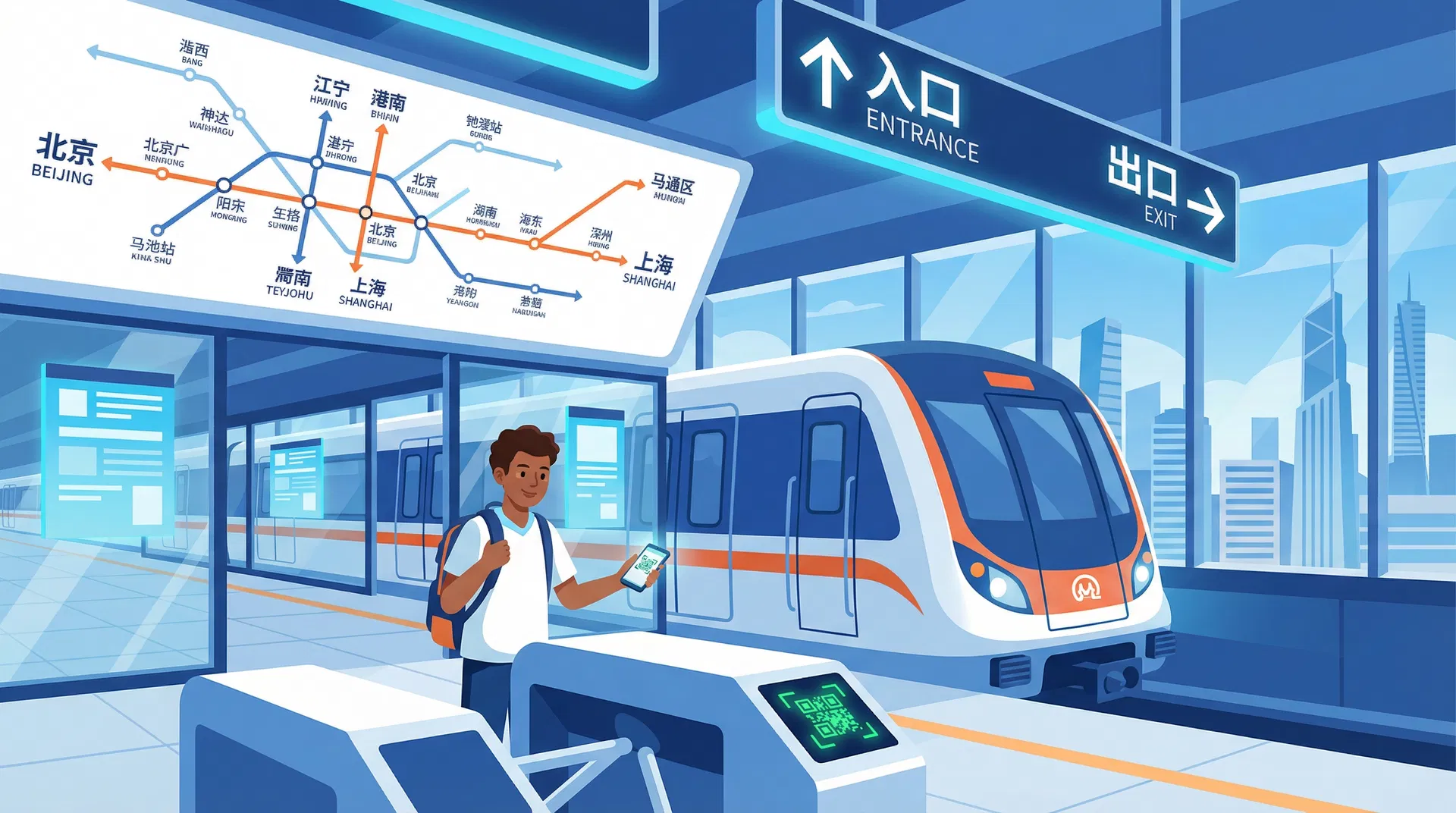
Beyond high-speed rail, China's urban metro networks are among the most extensive and modern in the world. Cities like Shanghai, Beijing, Chengdu, Wuhan, and Guangzhou have metro systems that rival or exceed those of London, Paris, and New York in terms of coverage, frequency, and cleanliness. A single metro journey typically costs between ¥2 and ¥6 RMB regardless of distance, and monthly passes are available at significant discounts.
For students living on campus, the combination of metro, bus, and cycling infrastructure means that car ownership is entirely unnecessary. Many universities are located directly on metro lines, and the integration between different modes of transport — including shared bicycles from platforms like Meituan and Hello Bike — makes daily commuting genuinely stress-free and inexpensive.
# 8. Abundant Work Opportunities and Career Development
China's economy, despite global headwinds, remains one of the largest and most dynamic in the world. For international students with Chinese language skills and a degree from a Chinese university, the job market offers genuine opportunities across a wide range of sectors — technology, finance, education, trade, logistics, and manufacturing among them.
The demand for bilingual professionals who understand both Chinese business culture and international markets is significant and growing. Multinational companies operating in China actively recruit graduates from Chinese universities, and the government has introduced policies to make it easier for foreign graduates to obtain work visas and residency permits. Students who invest in Mandarin language skills during their studies often find that their employability in global markets increases substantially.
# 9. Scholarship Ecosystem for International Students
China has made attracting international talent a national priority, and the scholarship infrastructure reflects this commitment. In addition to the Chinese Government Scholarship administered by the Ministry of Education, provincial governments, individual universities, and Confucius Institute programmes offer their own funding streams. The Belt and Road Scholarship specifically targets students from countries involved in China's international development initiatives.
Many of these scholarships are full-ride awards covering tuition, accommodation, health insurance, and a monthly living allowance of ¥1,500–3,000 RMB. The application process, while competitive, is considerably more accessible than equivalent programmes in the United States or Europe, particularly for students from developing nations who may face additional barriers in Western scholarship systems.
# 10. A Unique Cultural and Personal Growth Experience
Living in China as an international student is not simply an academic exercise — it is a profound personal transformation. Navigating daily life in a language and culture fundamentally different from one's own builds resilience, adaptability, and cross-cultural competence that employers across every industry increasingly value.
The experience of living in a society with a 5,000-year continuous civilisation, witnessing the pace of China's urban development firsthand, building friendships across dozens of nationalities at an international university, and developing genuine fluency in Mandarin — one of the world's most widely spoken languages — represents a combination of personal and professional development that is genuinely rare. Students who spend two, three, or four years in China consistently describe it as one of the most formative decisions of their lives.
# Final Thoughts
China is not a perfect country, and no country is. But for international students weighing their options, the combination of affordable education, low crime, exceptional infrastructure, abundant food, and genuine career opportunity makes China a compelling choice that deserves serious consideration. The students who arrive with an open mind and a willingness to engage with the culture tend to leave with something that no tuition bill can quantify: a genuinely expanded sense of what the world is and what is possible within it.