
When I first arrived at my university in China, I spent my first two months almost entirely within the international student bubble. My circle was a tight group of guys from Brazil, Nigeria, and Germany — we ate together, studied together, and honestly, we barely interacted with anyone outside our dormitory floor. It felt comfortable, but I knew I was missing something.
Looking back, that bubble is one of the most common traps for international students, especially guys. The good news? Breaking out of it is entirely possible, and the friendships you build on a Chinese campus can be some of the most rewarding of your life. Here is what I learned the hard way — and what I wish someone had told me on day one.
# The Bubble Is Real, and It Is Easy to Stay In It
Cultural differences create invisible walls. Language barriers make small talk exhausting. And when you are already surrounded by people who share your background and speak your language, it takes deliberate effort to step outside. Most international guys I know did not avoid Chinese classmates out of unfriendliness — they simply did not know how to start.
The key insight I eventually learned is this: shared activity beats conversation as an icebreaker. You do not need perfect Mandarin to play basketball together. You do not need to explain your entire life story before someone invites you to join a gaming session. In China, especially among guys, friendships often grow out of doing things together first, and talking deeply later.
# Sports: The Universal Language on Campus
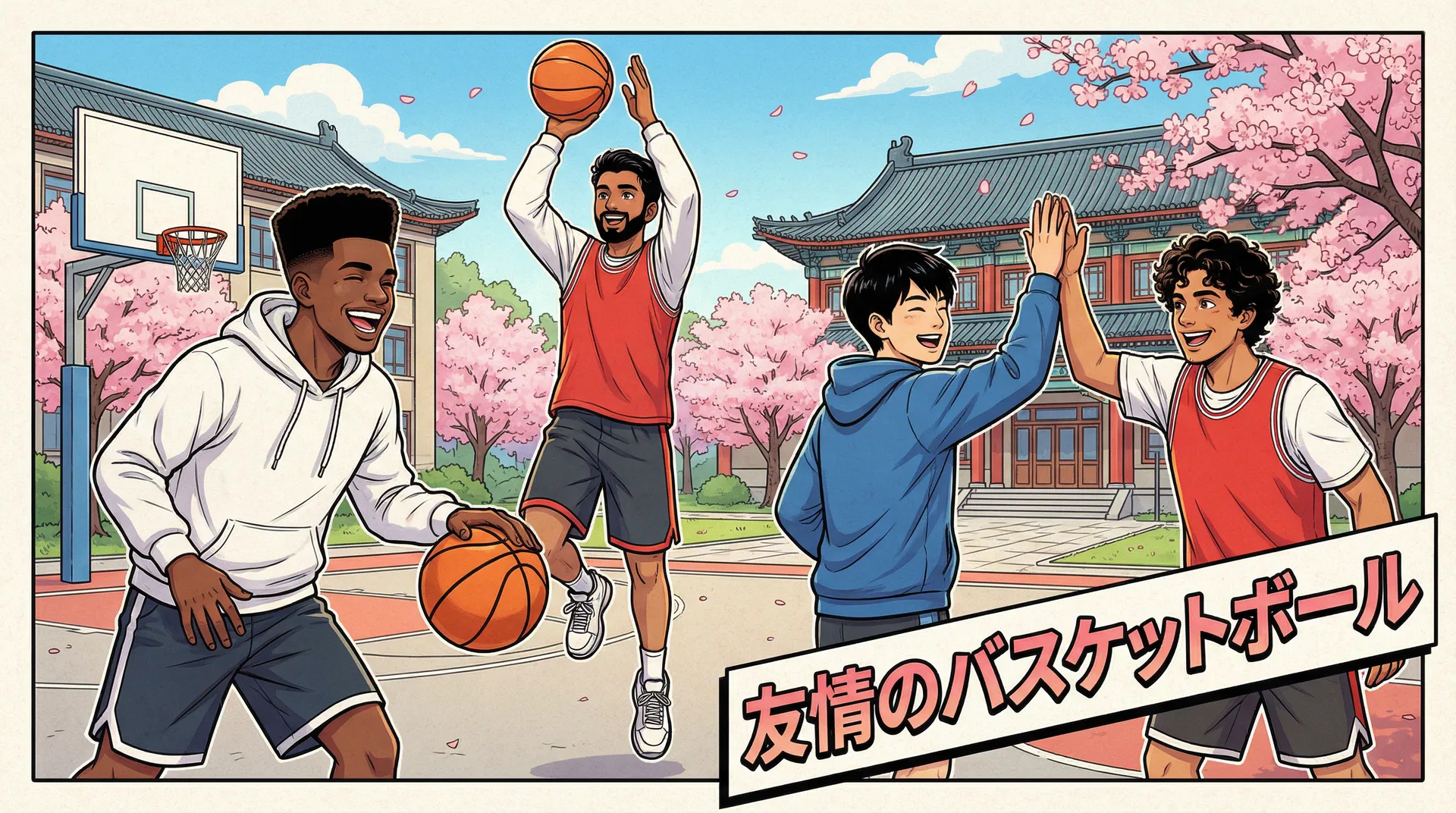
The basketball court is genuinely one of the best places to make friends on a Chinese campus. Courts are almost always busy in the evenings, pickup games are common, and showing up consistently means you will see the same faces week after week. I made three of my closest Chinese friends within the first month of joining a regular evening game — no formal introduction required, just showing up and playing.
Beyond basketball, the gym has become a serious social space on Chinese campuses. Gym culture has exploded among young Chinese men in recent years, and if you are a regular, you will naturally start exchanging tips, spotting each other, and eventually grabbing food after a session. Swimming pools are another underrated option — lanes are shared, and the locker room conversations are surprisingly easy.
The pattern is simple: find a sport you enjoy, show up consistently, and let repeated contact do the work. You are not forcing a friendship; you are creating the conditions for one to grow naturally.
# Gaming: Bigger Than You Think
If you are not into sports, gaming is an equally powerful entry point. Chinese university guys are deeply into gaming culture, and the range is wider than most international students expect. Mobile games like Honor of Kings (王者荣耀) are played by an enormous number of students — learning even the basics gives you instant common ground. PC gaming is huge, with titles like League of Legends, CS2, and various RPGs dominating dormitory evenings. And console gaming, particularly the Nintendo Switch, has a dedicated following.
You do not need to be good at these games. You need to be willing to play. Asking a classmate "Can you teach me how to play 王者荣耀?" is one of the most effective social moves I have ever made. It positions them as the expert, it gives you something to do together, and it signals genuine interest in their world. From there, conversations flow naturally.
# Outdoor Adventures: Hiking, Skiing, and Beyond
A growing number of Chinese university students are passionate about outdoor activities, and this is a fantastic space for international guys to connect. Weekend hiking trips to nearby mountains are popular at almost every campus — check your university's outdoor club (户外社团) for organized group hikes. The shared challenge of a long climb creates a kind of camaraderie that is hard to replicate in a classroom.
Skiing has also become genuinely trendy among young Chinese people, particularly after the 2022 Beijing Winter Olympics. If your campus is in northern China or near a ski resort, this is worth exploring. Even if you are a complete beginner, that is actually an advantage — learning something new together is one of the fastest ways to bond.
# Clubs, Organizations, and Social Media
Structured entry points matter. Most Chinese universities have dozens of student clubs (社团) covering everything from photography and music to debate and entrepreneurship. Joining one puts you in a recurring social context with people who share a specific interest — and recurring contact is the foundation of friendship.
Social media is equally important. WeChat is the backbone of social life in China: once you exchange WeChat contacts with someone, you are in their world. Group chats (微信群) for classes, clubs, and dormitory floors are where a huge amount of coordination and casual conversation happens. Being active in these groups — even just reacting to messages or sharing something relevant — keeps you visible.
Xiaohongshu (小红书) is worth mentioning too. It is more of a lifestyle and content platform than a direct messaging app, but many students use it to share campus life, find local recommendations, and connect with people who have similar interests. If you post about your experiences as an international student, you might be surprised how many people reach out.
# Six Culture Shocks Worth Knowing
Making friends in China is genuinely rewarding, but there are a few social dynamics that can catch international guys off guard. Understanding them early saves a lot of confusion.
1. Read the room: E-type versus I-type friends. Chinese students, like everyone else, range from highly extroverted to deeply introverted. Some guys will want to hang out every weekend and will text you constantly. Others need significant alone time and may go quiet for days without it meaning anything is wrong. Pay attention to how your friends recharge, and do not interpret an introvert's need for space as rejection.
2. The home is private territory. In China, there is a clear social hierarchy to where you spend time together. Casual friends meet at restaurants or on campus. Good friends might occasionally visit each other's dorm rooms. Being invited to someone's actual home — especially a family home — is a significant gesture of trust and closeness. Do not be surprised if you know someone for months before this happens, and do not push for it. The invitation will come when the friendship is ready.
3. Reciprocity varies by region. In many parts of China, particularly in northern cities, there is a strong culture of taking turns treating each other. One person pays for dinner this time; the other pays next time. Keeping rough mental track of this matters — it is a way of signaling that the friendship is balanced and that you value the relationship. In cities like Shanghai, splitting the bill (AA制) is increasingly common and completely acceptable. When in doubt, watch what your friends do and follow their lead.
4. Learn how your friend prefers to communicate. Some guys prefer meeting in person and find texting impersonal. Others live on WeChat and rarely pick up calls. Some will respond to voice messages immediately but ignore text for hours. There is no universal rule here — the key is to notice your friend's patterns and adapt. Asking directly ("Do you prefer WeChat or meeting up?") is also perfectly fine and usually appreciated.
5. Never talk behind a friend's back. This one is important. Gossiping about mutual friends — even casually — is considered genuinely disrespectful in Chinese social culture. If it gets back to the person (and in tight campus social networks, it often does), it can permanently damage the friendship and your reputation within the group. Keep criticism private and direct, or keep it to yourself entirely.
6. Acknowledge favors properly. If a friend helps you navigate a hospital visit, introduces you to someone useful, or goes significantly out of their way for you, acknowledge it. A small gift, a meal invitation, or even a thoughtful WeChat message goes a long way. Chinese social culture places real weight on reciprocity and gratitude — not in a transactional way, but as an expression of respect for the relationship. Ignoring a significant favor can leave the other person feeling that the friendship is one-sided.
# The Long Game
Real friendship takes time, and this is as true in China as anywhere else. The guys I am closest to now were not close friends after one basketball game or one gaming session. They became close friends after months of shared experiences — late-night study sessions before exams, a hiking trip where someone twisted their ankle and we all helped carry the gear back, a group dinner that turned into a four-hour conversation about life after graduation.
The practical advice is straightforward: show up consistently, engage with shared activities, learn a few words of Mandarin (even bad Mandarin is appreciated), and pay attention to the social cues around reciprocity and privacy. The cultural differences are real, but they are navigable — and on the other side of them are friendships that can last a lifetime.
Get off the dormitory floor. Find a basketball court. Download 王者荣耀. Join a hiking club. The rest will follow.