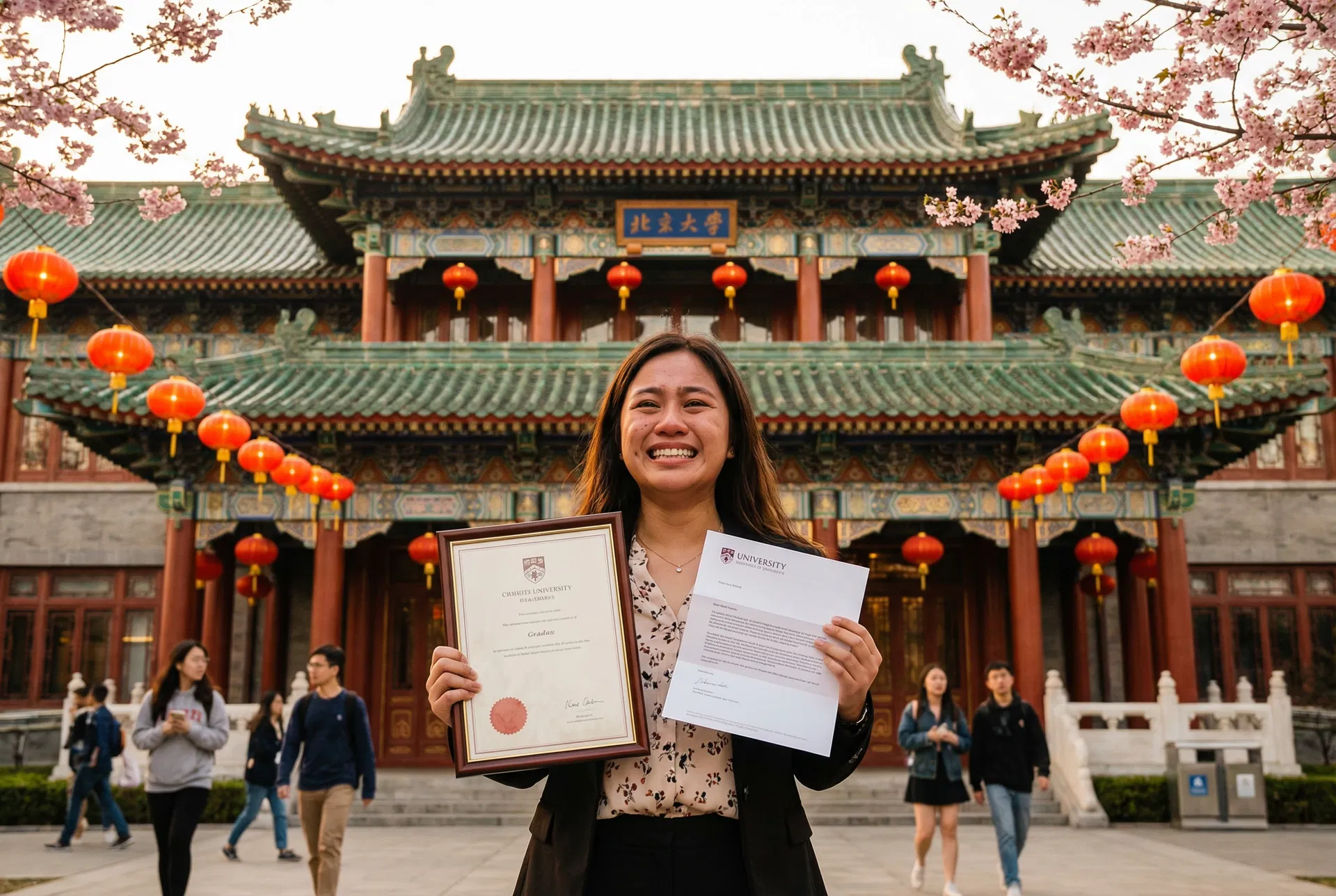

When I first arrived in China for my master's degree, I had no idea whether I would be able to build a career here after graduation. The language barrier felt enormous, the job market seemed opaque, and most of the advice I found online was written for Chinese nationals. Three years later, I have held two full-time positions in Shanghai, mentored a dozen international students through their first job searches, and learned that China — despite its complexity — is genuinely one of the more accessible job markets for motivated international graduates. This guide shares everything I wish I had known from day one.
# China's Economy Still Creates Opportunities
Despite the global headlines about economic slowdowns, China's GDP continues to grow at roughly 5% per year. To put that in perspective, most developed economies consider 2–3% growth healthy. That sustained expansion means companies are still hiring, new industries are still emerging, and the demand for internationally minded talent has not disappeared.
The job market is not without its pressures — domestic graduates number in the millions each year, and competition for top positions is fierce. But as an international student, you bring something that is genuinely scarce: fluency in a foreign language, cross-cultural communication skills, and a perspective shaped outside China's education system. These qualities are valued in specific sectors, and knowing which ones to target is the first step.
# Industries Where International Students Thrive
Not every industry is equally welcoming to foreign graduates. Based on the experience of students I have spoken with across Beijing, Shanghai, Shenzhen, and Chengdu, the most accessible sectors tend to be:
Foreign Trade and Cross-Border Commerce. China is the world's largest exporter, and companies engaged in international trade need people who can communicate fluently with overseas clients, understand foreign business cultures, and navigate English-language contracts. This is arguably the single largest source of employment for international graduates in China.
Education. Language teaching remains a reliable entry point, but the opportunities go further. International schools, EdTech companies, and corporate training firms all need curriculum designers, content creators, and program managers with international backgrounds.
Technology and Startups. China's tech sector — spanning e-commerce, fintech, AI, and gaming — increasingly operates on a global stage. Companies like ByteDance, Alibaba, and Tencent have international divisions that actively recruit multilingual talent. Smaller startups expanding into Southeast Asia, Africa, or Europe often find international graduates invaluable.
Consulting and Finance. Multinational consulting firms and investment banks maintain significant China operations and often prefer candidates who can bridge their global headquarters with local teams.
# Understanding the Company Landscape
Before you apply anywhere, it helps to understand the four broad categories of employers in China, because the culture inside each type differs dramatically.
State-Owned Enterprises (SOEs) offer stability, strong social benefits, and prestige — but they tend to move slowly, value seniority over performance, and can be challenging environments for people who are not fluent in Mandarin and familiar with Chinese bureaucratic culture.
Foreign-Invested Enterprises (FIEs) — the local subsidiaries of multinational companies — are often the most comfortable starting point for international graduates. Work culture tends to be more familiar, English is commonly used internally, and HR processes are more transparent.
Private Chinese Companies range from scrappy startups to massive conglomerates. The culture varies enormously: some are highly innovative and meritocratic, others operate with intense hierarchies and long hours. Research the specific company carefully before accepting an offer.
Startups can offer rapid learning, equity upside, and the excitement of building something new — but they also carry higher risk. Due diligence on funding status and founder background is essential.
# Start Your Internship Search in Your Third Year
This is the single most important timing insight I can offer: begin looking for internships at least one year before you plan to graduate. In China, as in most competitive markets, companies want to hire graduates who have already proven themselves in a professional environment. A candidate with relevant internship experience will consistently outperform one without it, regardless of academic results.
For undergraduate students, this means starting in your third year. For master's students, begin in your second year. Use the internship not just as a resume line but as an extended interview — many companies use internships as their primary pipeline for full-time hires. Converting an internship into a return offer is far more reliable than applying cold after graduation.
# What to Expect from Salaries and Benefits
Salary discussions in China almost always refer to pre-tax figures (税前). The actual amount deposited into your bank account will be lower after individual income tax and social insurance deductions. Make sure you clarify this when evaluating an offer.
A genuinely good employment package in China includes 五险一金 — five types of social insurance (pension, medical, unemployment, work injury, and maternity) plus a housing provident fund. This is legally required, but enforcement is inconsistent, particularly at smaller private companies and startups. If a company cannot confirm they provide 五险一金, treat that as a significant warning sign.
Overtime culture is a real consideration. Unlike in many European countries, Chinese labor law does not provide the same robust protections around working hours. Overtime pay calculations are often ambiguous in practice, and the expectation of long hours — sometimes described as 996 (9am to 9pm, six days a week) — exists in certain sectors, particularly tech and finance. Ask current employees about actual working hours before accepting an offer, not just HR.
The gold standard for work-life balance — five-day weeks, clear overtime policies, and full statutory benefits — is most reliably found at established multinational companies and the top tier of domestic firms. At smaller companies, be prepared to negotiate or accept trade-offs.
# Where to Look for Jobs
The Chinese job market has its own ecosystem of platforms that you need to know:
猎聘 (Liepin) is widely regarded as the premium platform for mid-to-senior roles and is popular with multinational companies. The interface is available in Chinese, so some Mandarin literacy helps.
LinkedIn remains the most internationally accessible platform and is actively used by foreign-invested companies and multinationals operating in China. It is also the best platform for cold outreach to hiring managers.
Boss直聘 (BOSS Zhipin) is a mobile-first platform where you can message hiring managers directly, which can accelerate response times significantly.
Campus Recruitment Fairs (校园招聘会) are organized by universities every autumn and spring. Major companies send HR teams specifically to recruit graduating students. These events are worth attending even if you are not yet graduating — they give you a realistic picture of what companies are looking for.
Internal Referrals deserve special mention. In a relationship-oriented society, many positions are filled before they are ever publicly advertised. A recommendation from someone inside the company carries disproportionate weight. This is why building your network proactively — not just when you need a job — is so important.
# Red Flags and Scams to Avoid
Unfortunately, the job market in China, like anywhere, has its share of bad actors. International students can be particularly vulnerable because they may be less familiar with local norms. Watch out for these warning signs:
Any employer who asks you to pay a training fee before starting work is almost certainly running a scam. Legitimate companies do not charge employees to begin working.
A company that refuses to provide a formal labor contract (劳动合同) is operating outside the law. You are entitled to a written contract, and signing one protects both parties. Do not accept verbal agreements for full-time employment.
Cash salary payments without payslips or bank transfers are a red flag. They may indicate the company is not registered properly, is avoiding tax obligations, or intends to deny your employment history later.
If a job posting promises unusually high salaries for entry-level roles with minimal requirements, treat it with skepticism. Research the company on platforms like 天眼查 (Tianyancha) to verify its registration status and legal history.
# Networking Is Not Optional
China is a 关系 (guānxi) society — a society built on relationships. This does not mean that merit does not matter, but it does mean that information, opportunities, and introductions flow through personal networks in ways that are less visible than in more transactional cultures.
Practical steps to build your network while still a student: attend industry events and alumni gatherings, connect with professors who have industry ties, join professional WeChat groups related to your target field, and reach out on LinkedIn to alumni from your university who are working in roles you aspire to. When someone helps you — whether by making an introduction, sharing information, or reviewing your resume — follow up with genuine gratitude. A small gesture, like a coffee invitation or a thoughtful message, goes a long way in maintaining relationships over time.
# Apply Widely and Persistently
The numbers can feel discouraging, but they reflect reality: many Chinese graduates send over 100 applications before receiving a single offer. This is not a sign of failure — it is simply the volume required to succeed in a competitive market. Cast a wide net across industries and company sizes, customize your materials for each application, and treat rejection as a data point rather than a verdict.
Track your applications systematically, follow up after interviews, and keep refining your resume based on the feedback you receive. Persistence, combined with genuine skill development, is the most reliable path to employment.
# Consider Entrepreneurship
If you have a strong idea and the appetite for risk, China offers a genuinely supportive environment for graduate entrepreneurs. Local governments across the country provide preferential policies for recent graduates, including subsidized or rent-free office space, tax exemptions for the first few years of operation, and startup grants. These programs vary by city, so research what is available in the municipality where you plan to operate.
China's manufacturing ecosystem, logistics infrastructure, and domestic market scale give startups advantages that are difficult to replicate elsewhere. If you have identified a genuine problem — particularly one that bridges Chinese supply with international demand, or that serves the growing middle class — the conditions for building a business here are more favorable than many outsiders realize.
# A Final Word
Finding a job in China as an international student is not easy, but it is absolutely achievable. The students I have seen succeed share a few common traits: they start early, they invest in Mandarin even if their target role does not strictly require it, they build relationships before they need them, and they approach the job market with the same rigor they bring to their academic work.
China rewards persistence. Start now, stay curious, and do not underestimate the value of the perspective you bring as someone who has chosen to build a life here.